
CAT LITTER SOURCING
How Importers Can Compare Cat Litter Samples Before Choosing a Supplier
Use a repeatable cat litter sample comparison protocol to evaluate supplier samples fairly, record buyer criteria, and make a clear sourcing decision.
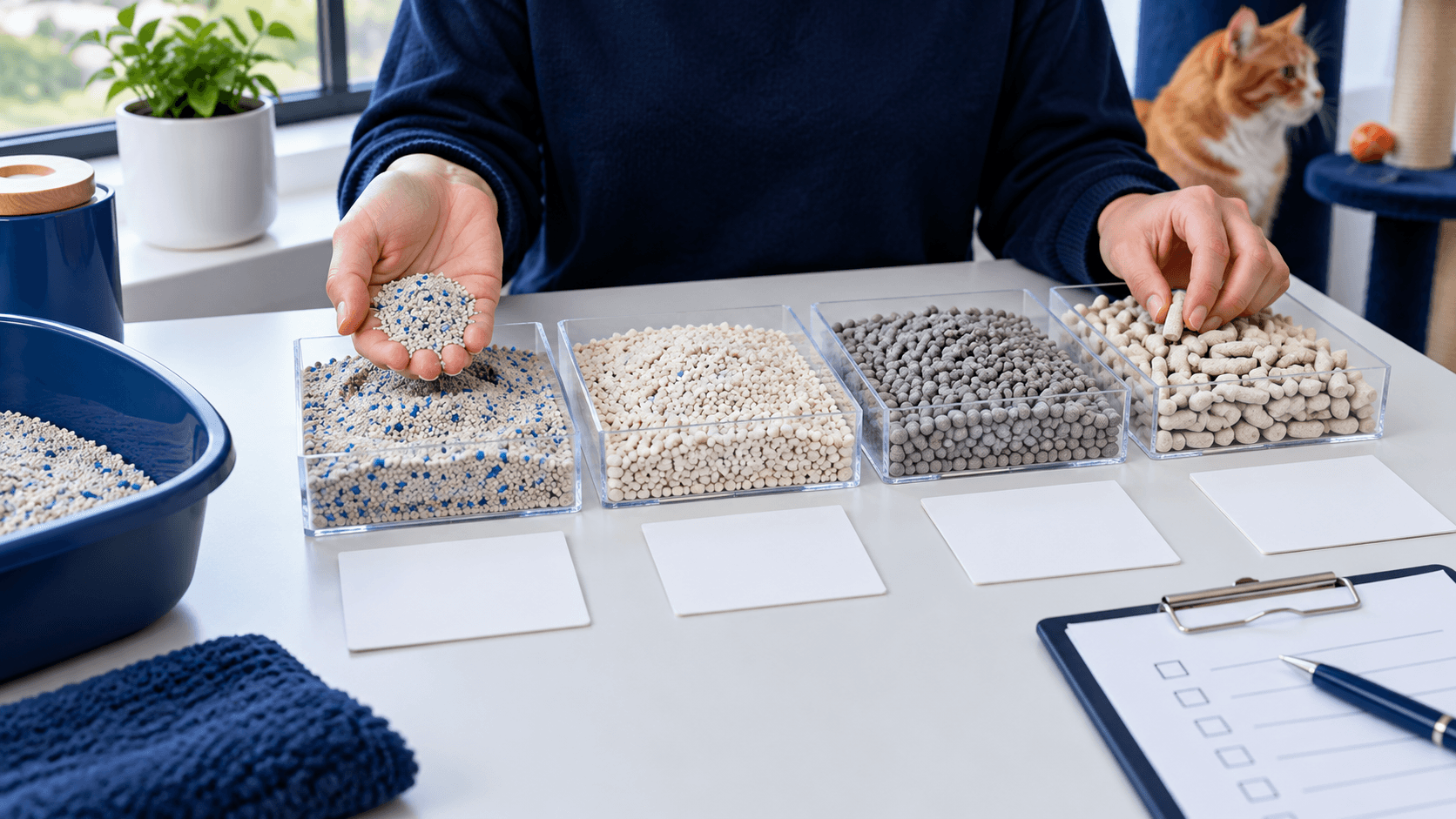
Importers can compare cat litter samples more fairly by defining the intended product and channel first, assigning each sample a code, using the same observation and test conditions, and recording results against agreed buyer criteria. Keep the sample identity, method, and approval decision together so that the quotation and later order brief refer to the same accepted material. A sample comparison supports a sourcing decision; it does not replace a written specification, supplier confirmation, or testing needed for market-specific claims.
1. Define the buying brief before samples arrive
Record the intended cat litter program, target sales channel, planned pack format, destination market, and the decision the sample must support. State which product type is under review, such as tofu, bentonite, pine, cassava, or silica gel cat litter. Do not compare unlike formats as if they were interchangeable. List only criteria that matter to the actual program and can be assessed consistently.
- Before requesting samples, confirm the product type; target channel and destination; intended pack format; buyer acceptance criteria; evaluation owner; and any claims that need evidence or specialist testing.
2. Assign each sample a neutral code
Give every sample a neutral code before evaluation. Record the supplier reference, material type, receipt date, sample condition, and any supplied specification. Keep commercial pricing separate during blind product review if that suits the buyer’s process. Photograph the sample and packaging, and retain a reference sample under the buyer’s own storage and handling rules.
3. Keep test conditions consistent
Use the same equipment, amount, room conditions, observation time, and method for every comparable sample. Write down each step before starting. If the team changes a method, repeat the affected comparisons under the revised method rather than combining results from different procedures. Choose observations relevant to the product type, such as appearance, handling, dust under a defined operation, or liquid interaction.
4. Separate observations from acceptance criteria
Record what the team observed separately from whether the sample met the buyer’s pre-agreed requirement. “Visible residue after the defined handling step” is an observation; “acceptable for this program” is a decision. Where a numeric limit or market claim is needed, use an appropriate method and written confirmation rather than estimating a value from a small sample.
5. Make sample approval traceable
The final record should identify the selected sample code, evaluation method and version, reviewers, unresolved questions, and approval date. Link the decision to the supplier quotation and product brief. Review any later change to material, packaging, or product parameters against the approved reference.
- Importer checklist: define product type, channel, destination, and pack; agree criteria before review; code and retain samples; use the same conditions; separate observations from decisions; record missing data and testing needs; link the selected sample to the quotation and written specification; reconfirm approval after a material or packaging change.
6. Frequently asked questions
Can one test compare different cat litter materials? It can support a range review when the buyer defines the purpose and criteria, but some tests only make sense within one product type. Should a sample be approved on appearance alone? Appearance may be one criterion, but the buyer should also consider the actual use, handling, packaging, and evidence needed for claims. Does sample approval guarantee every production lot will be identical? No. The approved sample is a reference; buyers should align it with a written specification and confirm the supplier’s process for the order. What if reviewers disagree? Record both observations, identify the disputed criterion, then repeat that part using the agreed method.
Practical takeaway
A repeatable sample protocol helps importers make a clearer sourcing decision and carry an approved reference into quotation and order planning. Emily pets offers a cat litter range that includes tofu, bentonite, pine, cassava, and silica gel options. Share the product type, evaluation criteria, target pack, and destination when preparing an inquiry.
Explore Emily pets Cat Litter