
Private Label Packaging
Dog Training Pad Packaging Artwork: 7 Checks Before Print Approval
Prepare dog training pad packaging artwork with seven checks for SKU data, barcode, pack count, dimensions, claims, carton details, and revision approval.
Direct answer
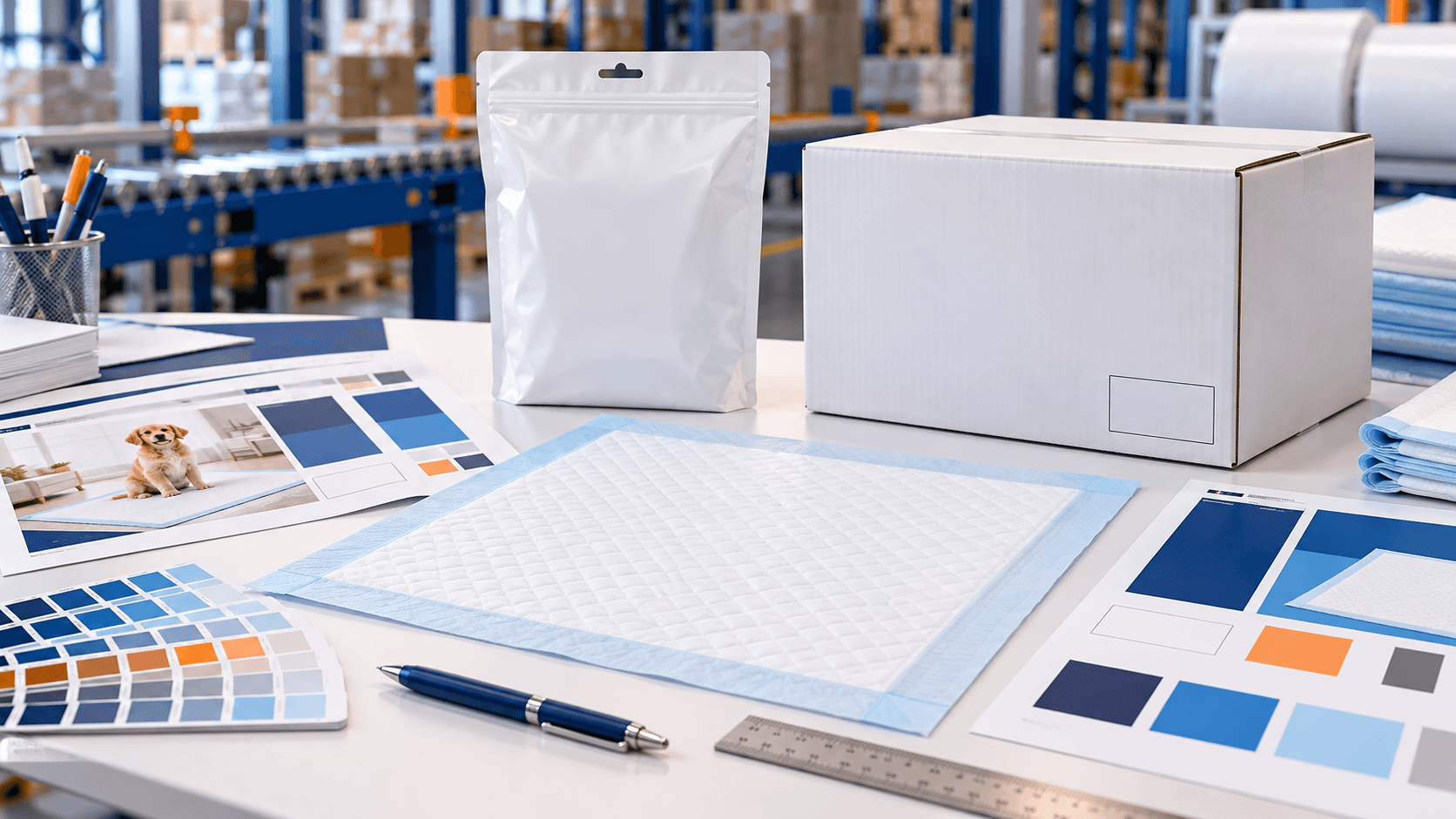
Before releasing dog training pad artwork to print, confirm seven things against the same SKU record: product identity, pad dimensions and pack count, barcode ownership and encoded data, approved text and claims, language and destination review, retail-pack and carton details, and the final file revision with written approval. Then check a physical pre-production pack when the project scope calls for one, because a digital proof cannot show every print, sealing, folding, or packing detail.
For an importer preparing private-label dog training pads, packaging artwork should be checked against the exact sellable SKU and the approved product pack. A useful pre-print review compares the file with the pad size, pack count, barcode data, approved copy, retail bag, and master-carton plan. This article offers an operational checklist; the buyer remains responsible for confirming the final claims and destination-market requirements for the selected item.
Who this guide is for
- Importers and distributors developing private-label dog training pads
- Retail buyers aligning pad specifications with packaging and item setup
- Procurement, artwork, and quality teams preparing a print release
Start with One SKU and One Controlled Artwork Record
A pad size, pack count, and retail bag together define the configuration that the artwork is meant to describe. If a brand uses multiple pad formats, create a separate artwork record for each sellable SKU and clearly identify the matching product specification. Do not rely on a filename or visual similarity to distinguish versions.
Emily pets currently publishes reference dog-pad formats of 600 x 600 mm in a 40-pad pack and 600 x 900 mm in a 20-pad pack. Treat these as published references only; confirm the chosen SKU, pack details, and approved quotation before artwork is finalized.
Seven Checks Before Print Approval
1. SKU identity. Match the brand's item code, product name, pad size, and version to the buyer's item master. Make sure the front panel, side panel, barcode record, and carton marks all point to the same sellable item.
2. Dimensions and quantity. Confirm whether artwork shows pad dimensions, pieces per retail pack, or both. Check the units and number formatting, and make sure the stated quantity matches the packaging specification and order. Keep a clear distinction between one pad's dimensions and the bag's finished dimensions.
3. Barcode data and responsibility. Identify who supplies the product identifier and who approves the final symbol file. Verify that the human-readable digits match the encoded data, that the symbol is not distorted in the design, and that the layout reserves the required clear area and contrast for the selected barcode type. Follow the applicable barcode specifications and intended scanning environment; a visual glance alone does not verify scan quality.
4. Product copy and claims. Compare every objective statement on pack with the approved product specification and available evidence. Avoid adding unsupported claims about absorbency, leak resistance, odor, attractants, safety, environmental impact, or intended pet size. Record which party supplies and approves the final wording.
5. Languages and destination review. Confirm the language version and the buyer-approved text for the destination market. Check translation, units, warnings, use and disposal directions, importer details, and any market-required information with the responsible regulatory or legal reviewer. Requirements differ by market and product; do not treat a generic artwork template as compliance approval.
6. Retail bag and master carton. Check that the retail pack can contain the approved folded pad configuration and that the carton quantity, dimensions, gross/net data, shipping marks, and item codes match the logistics record. If a carton label is a separate file, include it in the same artwork register rather than reviewing only the consumer-facing bag.
7. Revision and approval trail. Put a revision number or date on the controlled file record, list the files being released, and record the approver and approval date. Mark older versions as superseded and state which purchase order or production lot the release applies to. Route late edits through the same review before printing.
- One item code maps to one approved pad size, pack count, and artwork set
- Product dimensions and pack quantity match the approved specification
- Barcode owner, source data, human-readable digits, and placement are confirmed
- Claims and product descriptions match evidence for the selected SKU
- Language and destination-specific copy have buyer-side review
- Retail bag and master-carton information agree with the packing plan
- Final released files, approver, date, and affected order are recorded
Use Digital Proofs and Physical Samples for Different Checks
A digital proof is useful for reviewing text, item identity, panel placement, barcode content, language, and layout. It does not by itself establish the appearance or behavior of the finished printed bag or assembled carton. Where the project calls for a physical pre-production sample, identify what it represents: print colors, material, size, closure, filled pack, case pack, or some combination.
Record any deviations between the approved artwork and the physical sample. Decide whether the difference is acceptable, needs correction, or requires another approval. Keep product-performance tests separate from packaging artwork checks; artwork approval should not be treated as evidence of pad absorbency or leakage performance.
A Simple Artwork Handoff Packet
For each SKU, give the artwork and production teams one packet containing the item code, approved pad specification, pack count, finished bag and carton details, barcode data and owner, buyer-approved copy, target languages, destination, design files, proof comments, and current release status. Label unresolved items as open instead of letting them appear final by default.
Before a repeat order, compare the new order against the last approved pack. If the dimensions, count, text, barcode, bag material, carton pack, or destination changed, reopen the relevant review. This makes it easier for sales, packaging, quality, and logistics teams to work from the same released version.
Frequently Asked Questions
Who should provide the product identifier for a private-label pad? The brand owner is commonly responsible for assigning an identifier to its trade item. Confirm responsibility and applicable requirements for the specific product and packaging hierarchy before placing it in artwork.
Can one artwork file cover two pad sizes? Only if the buyer's approved packaging and item setup intentionally use one clearly controlled design for both SKUs. Each SKU's size, count, barcode, and carton data must still be checked independently.
Does approval of the PDF proof mean the printed bag is approved? Not necessarily. A digital proof supports content and layout review. If print color, material, closure, finished fit, or carton assembly matters, define whether a physical proof or pre-production sample is also required.
Should buyers print performance claims on the bag before sample approval? Claims should be based on the selected product's supporting evidence and reviewed for the destination market. If a claim or its evidence is unresolved, leave it out of the released artwork until approval is complete.
What should happen when artwork changes after approval? Issue a new revision, document the requested change and approver, identify affected SKUs and orders, and withdraw or mark the older file as superseded before the revised version is used.
Practical takeaway
Treat dog training pad packaging artwork as a controlled SKU record. Match the product and pack data, verify barcode content and layout, review claims and destination text, reconcile retail and carton files, and release one dated revision with written approval. Use a physical pre-production pack for the checks that a digital proof cannot establish.
Review Emily pets dog training pad product detailsLimits and confirmation points
- This article is an operational artwork checklist, not legal or regulatory advice.
- Labeling, language, barcode, and packaging requirements depend on the product, channel, and destination market; confirm current rules for each order.
- The product sizes and pack counts stated here are published reference configurations, not a promise that every order uses those configurations. Confirm the current SKU and quotation.
Continue the buying task
Dog Pee Pad Wholesale Guide: Construction, Absorbency Tests, Leakage, and Private Label Packs
Review pad construction and sample evaluation separately from packaging artwork release.
60 x 60 cm vs 60 x 90 cm Dog Training Pads: A Retail Buyer's Guide
Compare the published size and pack-count references used in this packaging checklist.