
Aspen Bedding Sourcing Guide
Aspen Shavings Wholesale Guide: Moisture, Dust Claims, Recovery, and Retail Packs
Learn how to source aspen shavings wholesale, evaluate moisture, visible dust, odor, pack recovery, and private-label retail and shipping terms.
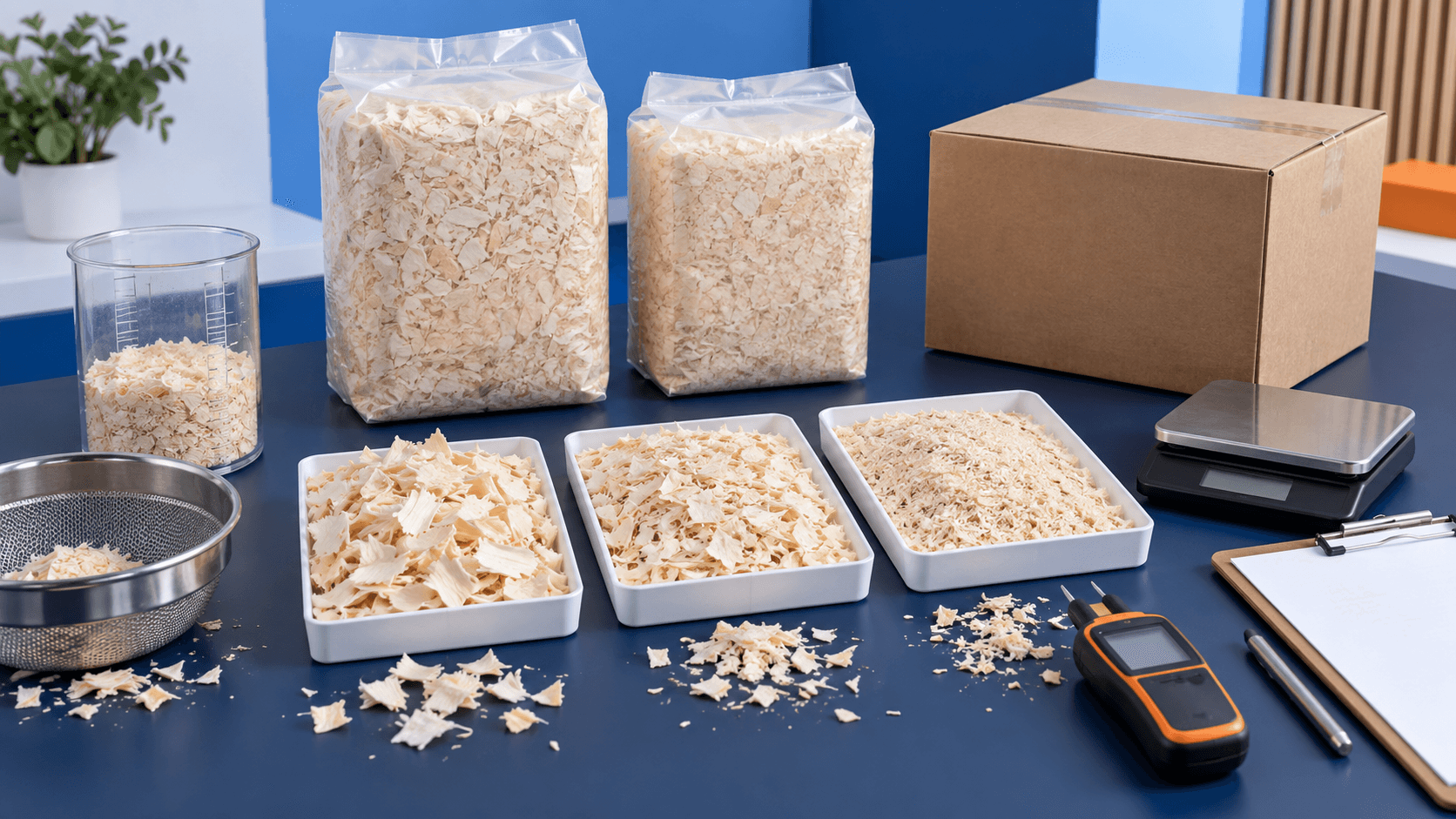
Learn how to source aspen shavings wholesale, evaluate moisture, visible dust, odor, pack recovery, and private-label retail and shipping terms. A usable buyer brief should define the aspen material, intended small-pet category, appearance, moisture method, visible-fines method, odor acceptance, compression and recovery procedure, retail weight, outer-pack configuration, quantity, destination, and quotation basis. Current Emily pets product data lists aspen wood, white appearance, unscented positioning, less than 10% moisture, dust-free wording, OEM/ODM availability, 500 g, 1 kg, and 4 kg pack references, and published commercial planning figures. The selected SKU, coded sample, written specification, packaging proof, quotation, and sales contract must control each order.
What Is Aspen Shavings Wholesale?
Aspen shavings wholesale is the bulk or private-label sourcing of aspen wood bedding for small-pet distributors, retailers, breeders, and pet-care brands. A complete program can include product specification, coded sample evaluation, compressed-pack testing, retail packaging, artwork approval, quotation, production release, inspection, and shipment planning.
Aspen should have a clear role in the assortment rather than being treated as another generic wood product. The current Emily pets direction is unscented aspen bedding with a white finished appearance. That can be positioned separately from pine, birch, fragranced bedding, wood flour, and pellet litter, but the final use wording and buyer claims must still match the selected SKU and destination market.
A useful first inquiry states the target country, sales channel, intended small-pet category, required material direction, retail role, pack size, number of SKUs, quantity range, artwork status, destination, and requested shipping basis. Mark every open point as a sampling, evidence, label, or quotation question.
- Target market and sales channel
- Intended small-pet category and assortment role
- Confirmed aspen material direction
- Unscented positioning and odor acceptance
- Retail weight and outer-pack preference
- Private-label artwork and barcode status
- Quantity range by SKU
- Destination and requested quotation basis
Which Aspen Bedding Specifications Should Buyers Define?
Material, appearance, moisture, visible fines, odor, foreign material, compression, and recovery are separate controls. Current Emily pets product information lists aspen wood, white appearance, unscented positioning, moisture below 10%, and dust-free wording. These are published product directions, not automatic acceptance limits for every customized order.
The written specification should identify the selected material, target chip distribution, allowed oversize and undersize portions, moisture test method, color reference, natural odor expectation, visible-fines method, foreign-material inspection, compression condition, and recovery procedure. Avoid relying only on words such as clean, soft, premium, or low dust because they do not create a repeatable acceptance decision.
Approve the chosen combination against a coded reference sample. If the material source, chip distribution, moisture method, compression, pack weight, or packaging process changes after approval, record the revision and decide whether a new sample test is required.
- Confirmed aspen wood description
- Accepted chip distribution and sampling method
- Oversize, undersize, and visible-fines limits
- Moisture method and maximum value
- White-appearance reference sample
- Unscented odor acceptance method
- Foreign-material inspection procedure
- Approved and retained sample code
How Should Buyers Compare Moisture, Fines, and Odor?
Use the same sample mass, conditioning period, equipment, handling sequence, and reporting format for every candidate. For moisture, agree on the instrument or laboratory method, sampling locations, test temperature, sample preparation, and number of readings. Report the individual results and the agreed decision rule rather than relying on one spot reading.
For visible fines, define what is being measured. One practical approach can record loose fines in an unopened sample, particles released during a fixed pouring procedure, and fines produced after a repeatable compression or handling simulation. Use the same sieve, shaking time, drop height, collection surface, and sample mass, then record the retained fractions and visible observations.
Unscented does not mean odorless under every storage or handling condition. Evaluate natural wood odor, packaging odor, damp or unusual odor, and any foreign smell separately. Use coded samples at the same temperature and ventilation conditions, and record whether an observation is visual, sensory, measured, or still awaiting external testing.
- Use one sample mass and conditioning period
- Set one moisture method and reading plan
- Use one sieve set and shaking time
- Test fines before and after fixed handling
- Record natural, packaging, damp, and foreign odors separately
- Photograph samples under consistent lighting
- Keep measured results separate from observations
- Classify each sample as pass, revise, reject, or retest
How Should Compression and Pack Recovery Be Tested?
Compressed bedding can reduce pack volume, but the useful question is how the selected product behaves after opening. Recovery depends on the material distribution, moisture, compression condition, storage, transport handling, opening method, and the time allowed before measurement. A supplier photograph is not a substitute for an agreed recovery procedure.
Use the same starting mass, sealed-pack condition, storage period, opening method, recovery times, measuring container, and leveling procedure for every sample. Record recovered volume at fixed intervals, visible chip structure, compacted areas, fines, and whether manual loosening was used. If the retail pack will state a volume, confirm how that statement is derived and reviewed for the destination market.
Compression also affects bag dimensions, shelf presentation, outer-pack count, carton or PP-bag handling, warehouse space, and loading assumptions. Buyers should approve the product and packaging together, because changing the compression can change both the customer experience and the freight calculation.
- Same starting mass and pack condition
- Defined storage and handling period
- Repeatable opening and loosening method
- Fixed recovery measurement times
- One container and leveling procedure
- Recovered volume and visible-structure notes
- Final sealed dimensions used for logistics
- Reapproval after compression or packaging changes
How Do Retail Packs and Claims Affect the Quote?
Current Emily pets packaging references are 500 g with 36 bags per PP outer bag, 1 kg with 24 bags per PP outer bag, and 4 kg with 6 bags per PP outer bag. These figures provide a starting point, but the final quotation should also define the product specification, compression, retail bag material, dimensions, closure, print method, outer-pack structure, shipping marks, pallet preference, SKU quantity, and destination.
The product page uses unscented and dust-free wording. Buyers should not place these or related claims directly on private-label artwork without defining the selected SKU, test or review method, evidence, and claim limits. The same discipline applies to natural, chemical-free, hypoallergenic, safe, biodegradable, compostable, absorbent, low tracking, and species-health statements.
Artwork should identify the correct net quantity, intended use, directions, warnings, disposal wording, importer information, barcode, language, and destination requirements. Compare quotations only when the product, compression, pack, outer count, print scope, quantity, and loading assumptions match. Show artwork, plate, sample, inspection, and packaging charges separately when applicable.
- 500 g, 1 kg, 4 kg, or another confirmed retail weight
- Bag material, dimensions, closure, and compression
- Units per PP outer bag or carton
- Artwork, print, barcode, and language scope
- Evidence basis for every objective claim
- Shipping marks and moisture protection
- Palletized or floor-loaded preference
- Final pack dimensions used in loading calculations
What Should an Aspen Shavings RFQ Include?
A decision-ready RFQ connects the material and test plan to one packaging and commercial basis. Include the target market, intended small-pet category, assortment role, aspen material question, appearance reference, moisture method, visible-fines test, odor acceptance, recovery procedure, retail weight, outer-pack preference, artwork status, quantity by SKU, destination, and requested Incoterms rule with a named place or port.
What does the current product page identify? It lists aspen wood, white appearance, unscented positioning, moisture below 10%, dust-free wording, and OEM/ODM availability. Which retail weights are published? The current references are 500 g, 1 kg, and 4 kg with defined PP outer-bag counts. Which applications are listed? Rabbits, chinchillas, hamsters, lizards, and other small pets are named, but final species-use wording and instructions still require buyer and destination review.
The current published commercial references are one 40 HQ container at approximately 4.46 metric tons, delivery within 20 days after payment, and T/T payment. These are initial planning references rather than universal promises. Final MOQ, loading quantity, lead time, payment, customization, sample charges, packaging costs, and shipping terms depend on the selected specification, packaging, quantity, destination, and signed quotation.
- Attach one measurable aspen bedding specification
- Define moisture, fines, odor, and recovery methods
- State retail and outer packaging by SKU
- Provide artwork and barcode status
- Share quantity range and destination
- Request a named Incoterms rule and location
- Ask the supplier to list assumptions and deviations
- Keep the approved sample, proof, and quotation aligned
Practical takeaway
A reliable aspen shavings wholesale program starts with a clearly defined unscented bedding role, then uses repeatable checks for moisture, visible fines, odor, compression, and pack recovery. Confirm retail weight, outer packaging, claims, quantity, destination, and shipping basis in writing. Keep the approved sample, specification, packaging proof, quotation, and sales contract aligned, and publish objective statements only when evidence for the selected SKU and destination market supports them.
Explore aspen bedding specifications