
Cat Snack Sourcing Guide
Cat Snacks Wholesale Guide: Formula, Shelf Life, Packaging, and Market Documents
Learn how to source cat snacks wholesale by confirming SKU formula, ingredients, shelf life, packaging, label content, case packs, and market documents.
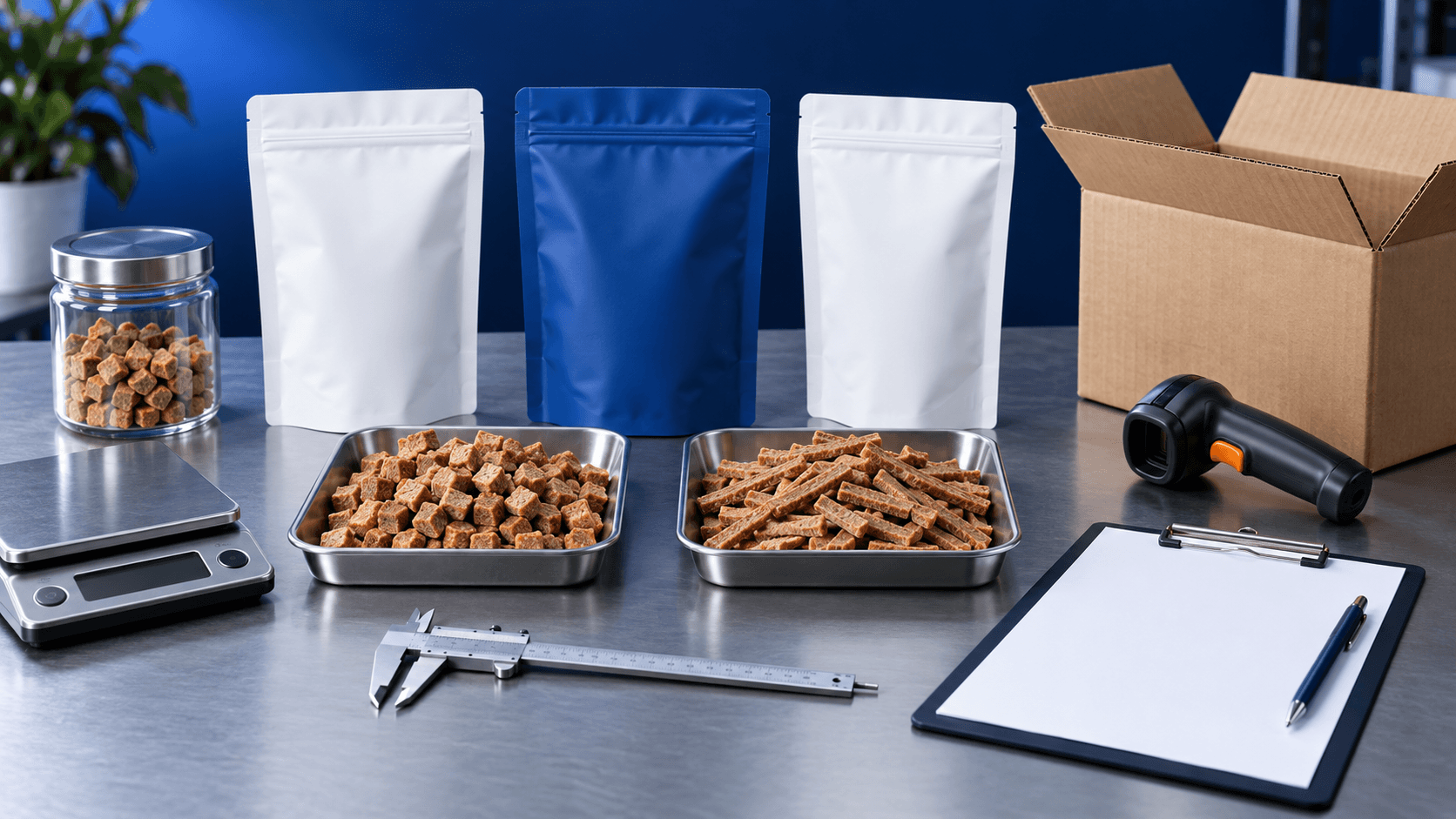
Cat snacks wholesale sourcing should begin with one clearly identified SKU and a destination-specific approval plan. Importers, distributors, retailers, and private-label buyers need to confirm formula, ingredients, product format, net weight, shelf life, storage, packaging, label content, case configuration, quantity, destination, and required market documents before comparing offers. Emily Pets lists Cat Snack as a dedicated product category, but the current company data deliberately treats formula, net weight, shelf life, case count, and food documents as SKU-specific items. Buyers should therefore use the selected sample, written specification, approved artwork, document list, quotation, and sales contract as the controlling order record.
What Should a Cat Snacks Wholesale Brief Define?
A useful cat snacks wholesale brief explains the commercial role of the product before asking for a price. State the destination country, sales channel, intended consumer segment, planned retail position, number of SKUs, target product format, pack direction, quantity range, artwork stage, and requested shipping basis. This gives the supplier enough context to separate product questions from packaging and market-entry questions.
Do not assume that every item shown under one category shares the same formula, ingredient list, nutrition panel, net weight, shelf life, case count, or documents. Current Emily Pets data identifies Cat Snack as an official category and product line, while requiring these details to be confirmed against the selected SKU. That SKU-level discipline prevents facts from one sample being copied to another offer.
Mark every unresolved item as a sample, specification, label, document, packaging, or commercial question. A decision-ready brief should make it obvious which facts are confirmed, which require evidence, which depend on the destination, and which will be stated only in the formal quotation.
- Destination market and sales channel
- Target buyer and retail position
- Selected SKU and product format
- Number of planned flavors or variants
- Retail pack and case-pack direction
- Artwork, barcode, and language status
- Quantity range and launch timing
- Destination and requested shipping basis
How Should Buyers Verify Formula and Ingredient Information?
Begin with the supplier's SKU-specific product specification and ingredient statement. The product name or a package photograph is not enough to establish the exact recipe. Ask for the ingredient sequence, relevant additive or processing information, declared species or protein source where applicable, product format, and the version date of the document used for the quotation.
Keep marketing language separate from compositional facts. Terms such as natural, high protein, grain free, single ingredient, functional, hypoallergenic, human grade, or complete nutrition can have specific evidence and regulatory implications. They should not appear in a buyer brief or private-label artwork unless the selected SKU, supporting records, and destination-market review justify the exact wording.
If a formula, ingredient source, shape, size, processing step, flavor, color, or supplier document changes after sample approval, record the revision and decide whether a new sample, specification, label, or market review is required. The retained sample code and specification version should remain linked throughout artwork and order approval.
- Exact SKU code and sample code
- Ingredient statement and document version
- Product format, dimensions, and appearance
- Relevant additive and processing questions
- Declared species or protein source where applicable
- Claim wording and evidence owner
- Destination ingredient restrictions
- Change-control and reapproval trigger
What Shelf-Life and Batch Evidence Should Be Reviewed?
Shelf life is not a category-wide number. Confirm the duration for the selected SKU, the start point used for calculation, required storage conditions, packaging configuration, coding format, and any difference between unopened product and a pack after opening. Ask who supports the value and which report, study, production history, or other evidence is available for review.
The packaging used for testing should match the commercial direction closely enough for the result to be relevant. A change in formula, moisture exposure, oxygen barrier, seal, pack size, storage temperature, or distribution route can change the evidence needed. Buyers should not copy a shelf-life statement from a different sample or package merely because the products share a category name.
Define the batch records expected with production and shipment. Depending on the selected item and agreement, these may include a batch identifier, production and expiry coding, specification or inspection results, quantity records, and agreed lot documents. Do not advertise a certificate of analysis, health certificate, or test report as standard unless its scope and availability have been confirmed in writing.
- SKU-specific shelf-life duration
- Calculation start point and coding format
- Required storage conditions
- Commercial pack used for supporting evidence
- Evidence type, date, scope, and owner
- Batch and lot identification method
- Shipment-document expectations
- Reassessment after product or pack changes
How Can Buyers Compare Cat Snack Samples Consistently?
Use a written comparison sheet before opening samples. Condition every pack under the same storage and room conditions, then record pack integrity, code legibility, net-content check, appearance, unit dimensions, visible breakage, color variation, odor observations, texture or handling observations, and any foreign-material concern. Keep measured results separate from sensory or visual notes.
Use the same sample mass, scale, caliper, tray, lighting, handling sequence, and reporting format for each candidate. If the product is counted by pieces, define the counting rule and how broken pieces are handled. If dimensions matter to the retail brief, record a distribution across multiple units rather than one selected piece.
Consumer acceptance or feeding suitability cannot be proven by an attractive sample photograph. Any palatability, feeding, nutritional, health, or species-use evaluation needs an appropriate buyer-approved method and responsible oversight. The wholesale comparison should state what was physically measured, what was observed, what documentation was reviewed, and what remains outside the current test.
- Sealed-pack condition and code legibility
- Net-content or piece-count method
- Appearance and dimension distribution
- Visible breakage and fines
- Odor and handling observations
- Consistent lighting and sample mass
- Measured results separated from opinions
- Pass, revise, reject, or retest decision
How Should Private-Label Packaging and Labels Be Approved?
Current Emily Pets product data supports SKU-level packaging review rather than a universal cat-snack pack. Confirm retail format, net weight, bag or container structure, dimensions, closure, seal direction, print method, case count, shipping marks, and barcode before approving artwork. The final filled-pack dimensions should be used for carton and logistics calculations.
The label brief should identify the legal product name, ingredient statement, nutrition or guaranteed-analysis content where required, net quantity, feeding or use directions, warnings, storage, batch and date coding, responsible business details, origin wording, barcode, languages, and disposal information required for the destination. Responsibility for regulatory review should be assigned rather than assumed.
Artwork claims need the same discipline as technical specifications. Do not add health, dental, functional, natural, premium, sustainable, species-source, protein, safety, or origin claims without confirming their exact basis for the selected SKU and target market. Approve a final proof only after product, label, barcode, pack structure, case configuration, and document references agree.
- Retail format and exact net quantity
- Pack structure, dimensions, closure, and seal
- Case count and shipping marks
- Product name, ingredients, and required analysis
- Directions, warnings, storage, and date coding
- Responsible business and origin wording
- Barcode, languages, and artwork version
- Evidence basis for every objective claim
Which Market Documents Should Importers Assign?
Document requirements depend on the selected SKU, ingredients, processing, origin, destination country, importer role, and shipment route. Start with a responsibility matrix that names each required record, the party expected to provide it, the reviewing party, the submission date, and the rule or commercial requirement that creates the need.
Possible requests may include product and ingredient specifications, label artwork, batch records, test or inspection reports, commercial documents, packing information, and destination-specific food or veterinary documents. This is a planning list, not a statement that every document is available or required. Confirm the exact name, issuing party, validity, language, legalization, and shipment linkage before promising it to a customer or authority.
Separate evidence for the product from documents for the shipment and from buyer-owned registrations or importer obligations. If a required record is unavailable, do not replace it with a generic certificate, website statement, or document from another SKU. Record the gap early enough to change the product, claim, label, destination plan, or commercial offer.
- Destination classification and importer requirements
- Product and ingredient specifications
- Label and artwork approval records
- Batch, test, or inspection records if agreed
- Commercial invoice and packing information
- Destination food or veterinary documents if required
- Issuer, validity, language, and legalization
- Named owner and due date for every document
Cat Snacks Wholesale FAQ
Is there one standard MOQ or lead time for Emily Pets cat snacks? The current category data does not publish a universal value. MOQ, sample route, lead time, payment, pack cost, case count, loading plan, and shipping terms must be confirmed for the selected SKU, quantity, packaging, destination, and production plan in the formal quotation.
Can buyers request private-label packaging? The current product direction supports artwork, label language, barcode, and case-configuration alignment. Final feasibility depends on the selected SKU, retail format, quantity, packaging route, destination content, and written approval process.
What should be sent with the first RFQ? Provide the destination market, channel, target product format, number of SKUs, formula or ingredient priorities, pack size, artwork status, quantity range, case-pack preference, required documents, destination port or city, and requested shipping basis. Ask the supplier to list assumptions, deviations, and items still awaiting confirmation.
- Do not infer formula from the category name
- Do not reuse shelf life across different SKUs
- Do not print claims before evidence review
- Do not assume one document covers every market
- Confirm MOQ and lead time in the quotation
- Approve product and packaging together
- Keep the retained sample and document versions
- Align the final quotation and sales contract
Practical takeaway
A reliable cat snacks wholesale program is controlled at SKU level. Confirm formula, ingredients, sample method, shelf-life evidence, storage, retail packaging, label content, case configuration, quantity, destination, and market documents before approving the offer. Keep the coded sample, written specification, evidence file, artwork proof, quotation, and sales contract aligned, and treat any unsupported claim or unconfirmed commercial term as an open item rather than a promise.
Review the Emily Pets cat snack category