
Cat Care Guide
How Often Should You Change Cat Litter? A Practical Guide
Learn how often to scoop and replace cat litter, how much litter to use, and how litter type, box setup, and multiple cats change the cleaning routine.
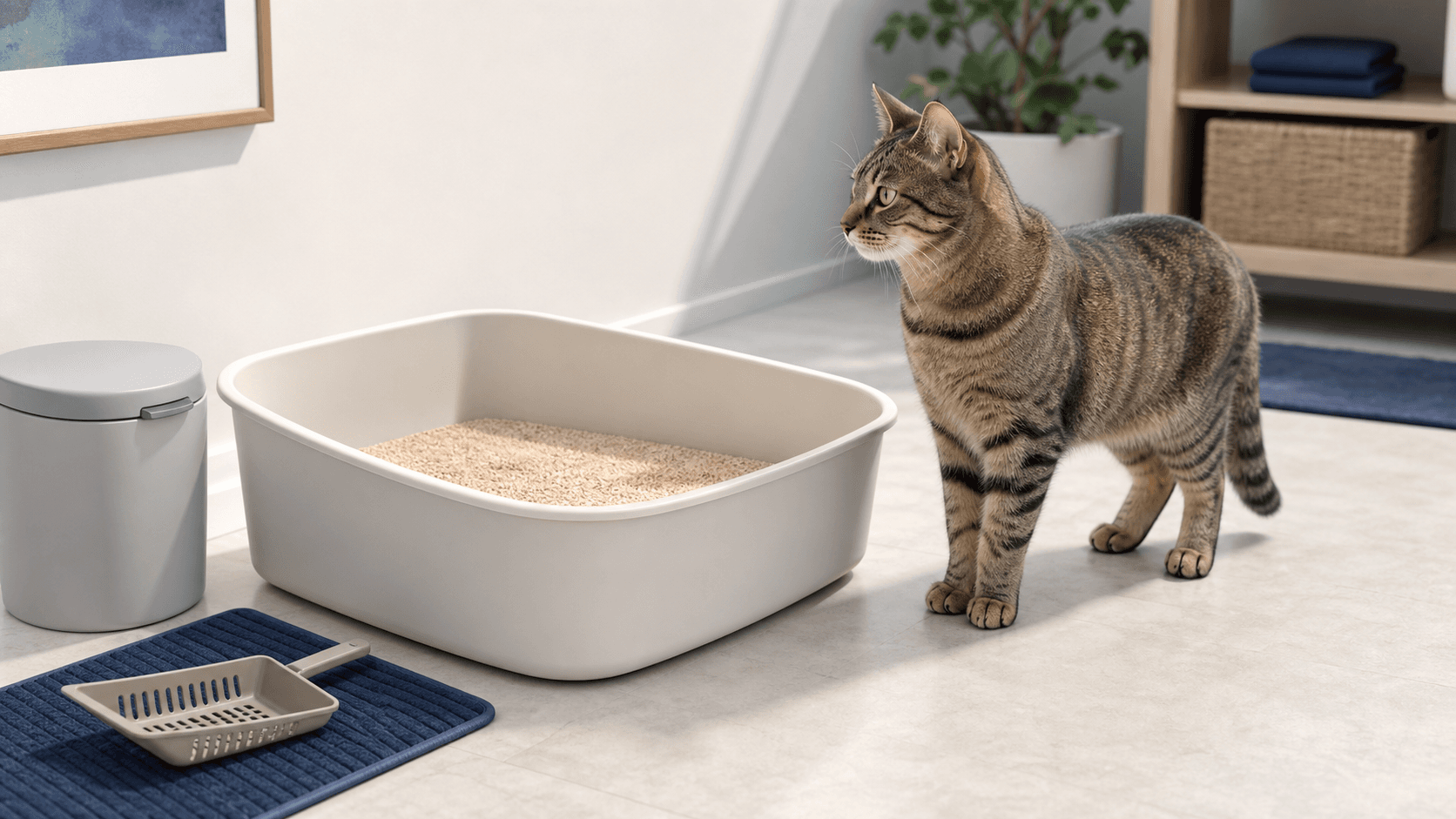
How often should you change cat litter? Scoop urine clumps and feces at least once every day, then replace all litter and wash the box on a regular schedule based on litter type, the number of cats, and odor or residue. A clean box supports feline comfort and also makes changes in urine or stool easier to notice. There is no single full-replacement interval that suits every cat litter. Clumping litter, non-clumping clay, silica crystals, tofu litter, and wood pellets absorb waste differently. The best routine combines daily observation, the product instructions, and your cat's individual preferences.
How Often Should You Scoop and Replace Cat Litter?
For most households, daily scooping is the non-negotiable starting point. Remove feces and urine clumps at least once a day; twice daily can be useful for small boxes, heavy use, or cats that are especially particular about cleanliness. The ASPCA and American Association of Feline Practitioners both emphasize frequent scooping because many cats avoid a box that contains waste.
A complete litter change is different from scooping. Empty the box when clean litter can no longer control odor, damp residue remains, clumps break apart, or the manufacturer's recommended service period has ended. Even when the surface looks clean, residue can collect on the bottom and sides. A weekly full change and wash is a practical baseline for many traditional litter setups, but some products are designed for a different interval, so always check the label.
Do not simply pour fresh litter over a dirty base indefinitely. Topping up works only after waste is removed and the remaining litter is dry, clean, and free of persistent odor.
- Scoop urine clumps and feces at least once daily
- Check the bottom and corners for damp residue
- Top up only after waste has been removed
- Empty and wash the box when odor or residue persists
- Follow the litter manufacturer's replacement instructions
How Cat Litter Type Changes the Cleaning Schedule
Clumping cat litter forms removable masses around urine. Because much of the soiled material leaves during scooping, the remaining clean litter can often stay in service longer than non-clumping litter. Remove intact clumps gently, keep the recommended depth, and replace the full box when clumps begin to crumble, odor remains after scooping, or the label says it is time.
Non-clumping clay absorbs urine but does not isolate it into removable clumps. That means moisture and odor can spread through the bed, so complete replacement is generally needed more often. Stirring or topping up cannot make saturated litter clean again.
Silica crystal, tofu, corn, paper, and wood-pellet litters behave differently. Some absorb liquid, some clump, and some break down into sawdust. Use visible changes, odor, moisture, and the package directions rather than assuming every alternative litter follows the same calendar. If you switch cat litter, introduce the new material gradually because sudden changes in texture or scent can cause box avoidance.
- Clumping litter: remove complete clumps before they break apart
- Non-clumping litter: replace sooner when moisture spreads through the bed
- Pellet litter: remove waste and manage broken-down material as directed
- Crystal litter: monitor saturation and follow the package service period
- Any litter: replace immediately if it becomes wet, contaminated, or strongly odorous
How Much Cat Litter Should Be in the Box?
More litter is not automatically cleaner. Many cats prefer a shallow bed of fine, unscented litter. ASPCA guidance suggests starting with about one to two inches, while cat-friendly guidance from AAFP commonly uses roughly one and a half inches as a practical reference. Individual preferences vary, so observe whether your cat digs comfortably, buries waste, and enters the box without hesitation.
A bed that is too deep can feel unstable underfoot and may increase tracking. A layer that is too thin can allow urine to reach the box floor and create stuck clumps. Keep the depth reasonably consistent after scooping rather than allowing it to fluctuate from almost empty to excessively deep.
Box size matters as much as litter depth. A commonly recommended target is a box about one and a half times the cat's body length, measured from the nose to the base of the tail. The cat should be able to enter, turn, dig, and choose a clean area without feeling cramped.
- Start with about 1–2 inches of litter
- Use a box large enough for easy turning and digging
- Choose a low entry for kittens, senior cats, or cats with limited mobility
- Keep food and water away from the toileting area
- Adjust depth gradually if your cat shows a clear preference
What Changes in a Multi-Cat Home?
A single large litter box is not the same as several separate toileting options. A widely used rule is one litter box per cat, plus one extra. Two cats therefore benefit from three boxes. Place them in more than one location so one cat cannot guard every route or trap another cat near the exit.
Multiple cats also increase the amount of urine and feces each box receives. Scoop more often when needed and watch how quickly odor, crumbling clumps, or damp areas return. A cleaning schedule that worked for one cat may be inadequate after a second cat arrives.
Quiet, accessible locations are preferable to noisy appliances, busy hallways, or dead-end corners. Boxes placed side by side may function like one resource from a cat's perspective, so distributing them around the home usually offers more meaningful choice.
- Provide one litter box per cat, plus one extra
- Distribute boxes across separate, accessible locations
- Avoid noisy appliances and areas where a cat can be cornered
- Scoop more frequently when several cats share a box
- Track which cat uses which box when health monitoring matters
How to Wash a Litter Box Without Creating Aversion
Empty the litter into a sealed waste bag, then wash the box with warm water and a mild unscented soap. Rinse thoroughly and dry it completely before adding fresh cat litter. Strong disinfectants, perfumes, litter deodorizers, and lingering chemical smells can be unpleasant to a cat's sensitive sense of smell.
Inspect the plastic while the box is empty. Deep scratches can hold residue and odor even after washing; a worn box that cannot be cleaned effectively should be replaced. Use a dedicated scoop and clean it regularly as well.
When changing brands or materials, add a small amount of the new litter to the familiar litter and increase the proportion gradually. A sudden switch in scent, particle size, or footing can create an aversion. If possible, offer two boxes with different litters and let the cat show a preference rather than forcing an abrupt change.
- Use warm water and mild unscented soap
- Rinse well and dry the box completely
- Avoid strong fragrance and lingering disinfectant odor
- Clean the scoop and surrounding floor
- Replace deeply scratched boxes that retain odor
- Transition to a new litter gradually
When Litter Box Changes Need a Veterinarian
A litter-box problem is not always a cleaning problem. Cornell Feline Health Center notes that urinary, digestive, endocrine, mobility, and age-related conditions can change elimination behavior. Contact a veterinarian if a cat suddenly urinates outside the box, visits more often, cries while eliminating, has blood in the urine, or shows a major change in urine or stool.
Straining to urinate, making repeated attempts, or producing little or no urine may indicate urethral obstruction. This is a medical emergency, especially in male cats, and requires immediate veterinary attention. Do not wait for a new litter or a cleaner box to solve it.
Human hygiene matters too. The CDC advises changing cat litter daily and washing hands afterward. People who are pregnant or immunocompromised should have someone else clean the box when possible; if that is not possible, they should wear disposable gloves and wash their hands thoroughly. Daily removal is important because Toxoplasma in feces generally takes one to five days to become infectious.
This guide is based on public guidance from the ASPCA, the American Association of Feline Practitioners, the U.S. Centers for Disease Control and Prevention, and Cornell Feline Health Center. It provides general education and does not replace veterinary diagnosis.
- Seek veterinary advice for sudden house-soiling or behavior changes
- Treat straining with little or no urine as an emergency
- Watch for blood, pain, repeated attempts, or unusual vocalizing
- Change litter daily and wash hands after handling waste
- Use gloves and extra precautions during pregnancy or immunosuppression
Practical takeaway
A reliable cat litter routine is simple: scoop at least daily, top up only with clean litter, replace the full box according to the litter type and household use, and wash the box with mild unscented soap. Give each cat enough clean, accessible box space. If a cat suddenly stops using the box or strains to urinate, treat it as a health signal—not a behavior problem—and contact a veterinarian.
Explore bentonite cat litter