
Category Planning
What importers usually compare first when planning a dog pee pad range
Absorbency positioning, pack architecture, and shelf role matter more when they are framed against channel needs instead of generic feature lists.
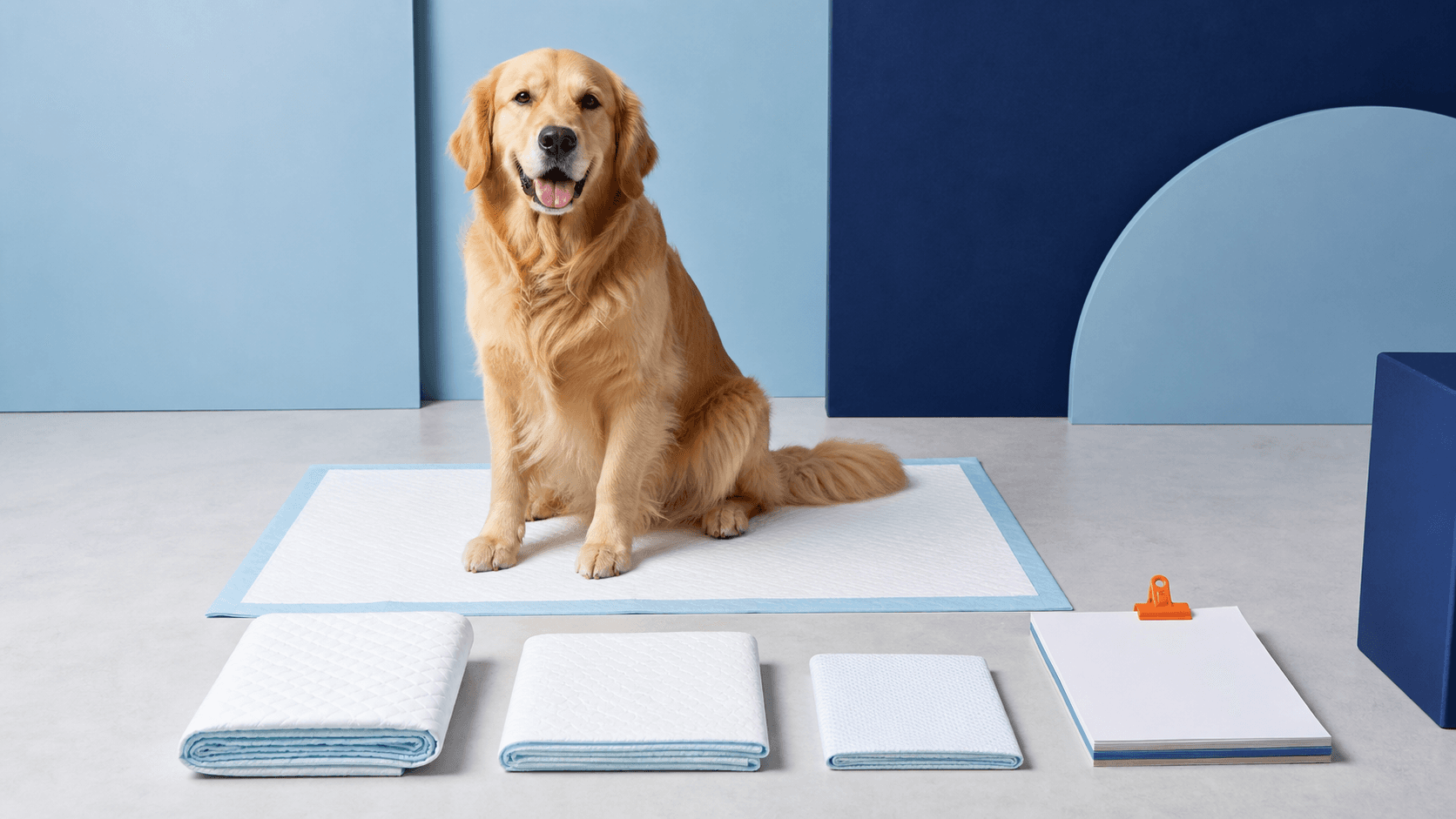
A dog pee pad range is easier to source when each SKU has a clear user and channel role. Size, absorbent construction, pack count, and packaging format should support that role rather than create unnecessary overlap.
Define the use case
Clarify whether the pad is positioned for puppy training, indoor daily use, travel, senior pets, or breeder and professional use. This guides the dimensions, absorbency tier, and pack count discussion.
- Primary pet size
- Intended use
- Sales channel
- Target retail tier
Compare construction with the same method
Ask suppliers to explain the top sheet, absorbent core, leak-proof backing, edge sealing, and optional attractant or fragrance separately. A single absorbency headline does not show how the pad behaves in use.
Use the same liquid volume, pour location, wait time, and surface inspection for every sample. Record results rather than relying on memory.
Build a pack architecture
Select pack counts and bag dimensions that fit shelf, carton, and household usage expectations. Confirm whether the range needs one volume SKU or several clearly differentiated options.
- Pad dimensions
- Pack count
- Bag and carton size
- Private label panel
- Quantity range for quotation
Practical takeaway
A focused range with distinct use cases is usually easier to explain, quote, and replenish than a long list of nearly identical SKUs.
Explore dog pee pad supply